
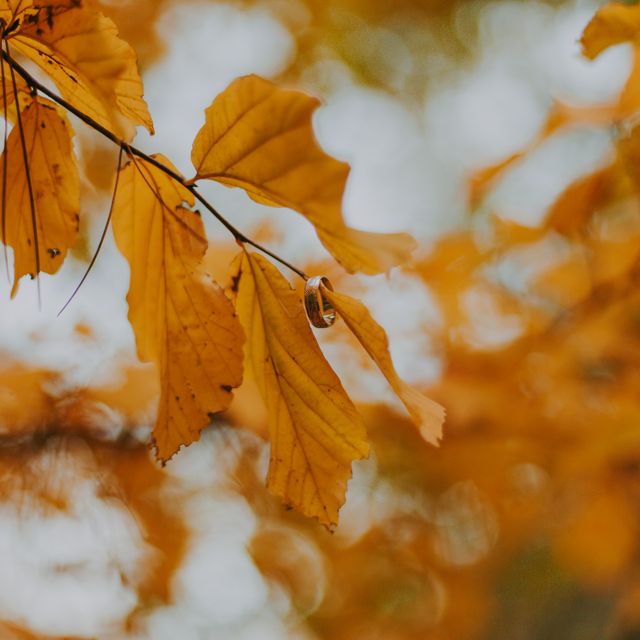
If you’ve spent any time in the wedding industry, you’ll have heard the term “shoulder season” thrown about. It’s the stretch either side of peak summer, roughly March to April and October to November here in the UK, when demand and prices sit somewhere between the busiest months and the quiet ones. And if you’re a celebrant, autumn ceremonies in particular are worth paying proper attention to.
Why couples are choosing autumn ceremonies
Peak wedding season, broadly May to September, is when venues, suppliers and celebrants are booked to capacity and prices reflect that. Couples who marry in October or November are often working with more flexible venue rates, a wider choice of suppliers who actually have availability, and weather that, while less predictable than August, still gives you golden light, crisp air and genuinely beautiful photographs. Autumn ceremonies have their own atmosphere: warm colours, cosy textures, candlelight indoors if the weather turns. Plenty of couples now choose it deliberately rather than settling for it.
Why it works for your practice too
For celebrants, the shoulder season is a genuine opportunity rather than a consolation prize. If your summer months are already full, autumn enquiries let you extend your working season without the same scramble for availability that peak months bring. And because fewer celebrants are actively marketing autumn dates (most marketing effort in this industry still assumes summer is the goal), there’s less noise to compete with when a couple starts searching.
It’s also a good season for the type of ceremony that plays to a celebrant’s strengths. Autumn weddings tend to be smaller, more intimate, and more personal by nature, which suits exactly the kind of ceremony writing that makes celebrant-led weddings different from a standard script.
A few practical things worth thinking about
If you want to make the most of the shoulder season, a few small adjustments help. Update your website and social content to actually show autumn ceremonies, not just summer ones. If most of your portfolio images are sunny garden weddings, a couple planning a November date may not picture themselves in your work. Talk openly with enquiries about weather contingencies (indoor backup plans, timing around earlier sunsets) so they feel confident rather than anxious about the season. And if you haven’t priced separately for shoulder season yet, it’s worth considering whether your peak-season rates make sense to hold steady, or whether a touch of flexibility helps you fill dates that might otherwise sit empty.
The bigger picture
Building a sustainable celebrant practice isn’t only about surviving the busy months. It’s about having a rhythm across the whole year that doesn’t leave you either burnt out in August or scraping for enquiries in November. Autumn ceremonies are one of the more reliable ways to smooth that out, and they happen to produce some genuinely stunning days along the way.
If you’re training to become a celebrant and want to think through how to build a practice with a sustainable rhythm across the year, that’s exactly the kind of thing we work through together. My free guide, [Transitioning to a Celebrant Career], is a good starting point, or book an Informed Decision Session and we can talk it through directly.
Warmly,
Dinah She/Her