
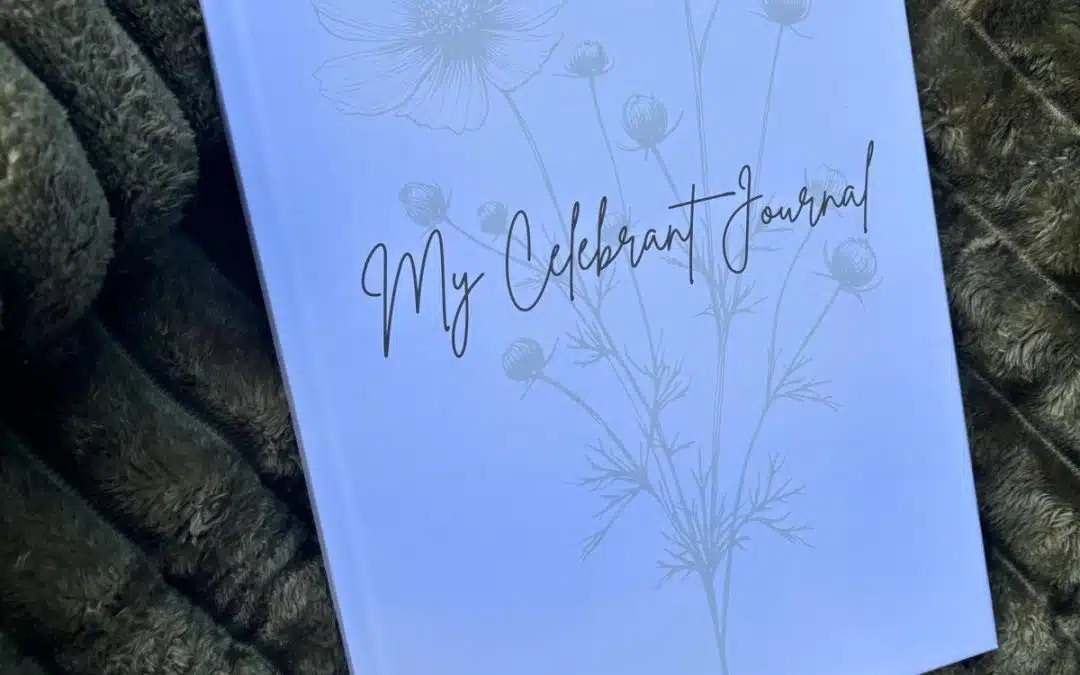
Nobody warns you, when you start training as a celebrant, about what happens after the ceremony ends.
You put everything into that hour. The consultation, the writing, the rewriting, the rehearsal. And then the day itself, where you’re holding the room, reading the mood, staying steady for a family or a couple who need you to be exactly that. Then it’s over, and you drive home, and there’s nothing waiting to catch what you’re carrying.
That’s the gap The Celebrant’s Journal was built for.
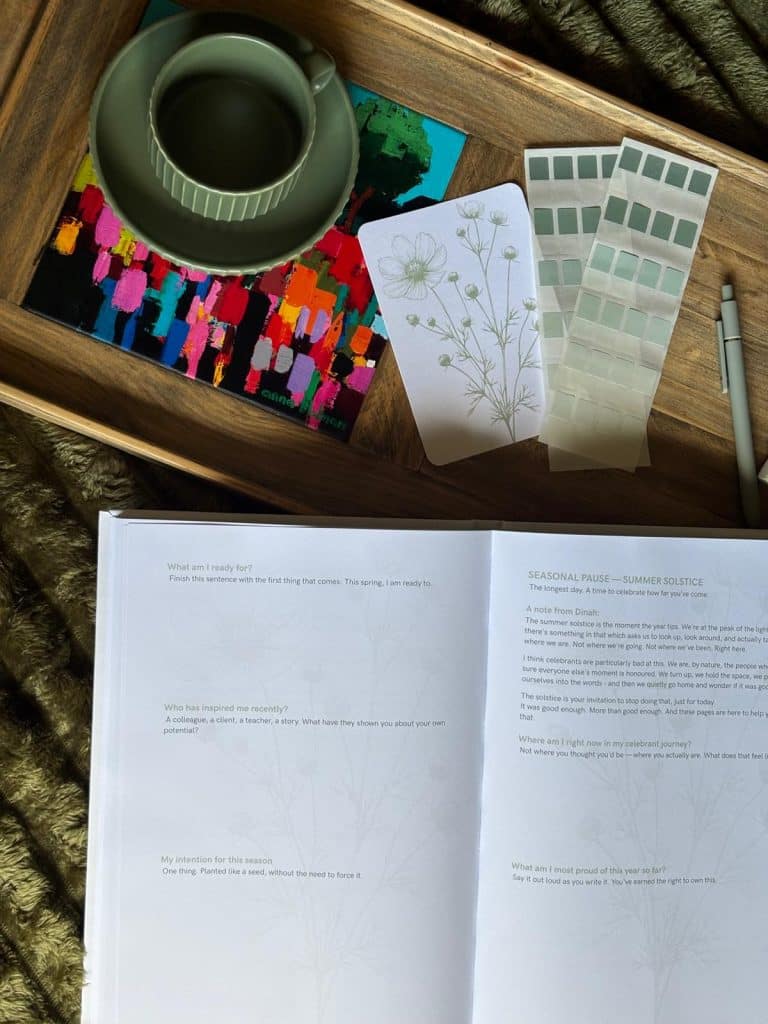
The Celebrant’s Journal isn’t a business planner
This isn’t a place to track your enquiries or plan your marketing. There are other tools for that, and I talk about them elsewhere. I designed the journal to give you somewhere to put the ceremony down once it’s over. Especially the ones that stay with you longer than the rest. A space to clear your mind, to review your personal and professional progress. And a place where it’s okay to express the weight of the work we do.
Some ceremonies are simple to carry. Others aren’t. A funeral where the grief in the room was almost physical. A wedding where something in the couple’s story touched something in your own. A ceremony that went beautifully but still left you quietly drained. Celebrants absorb a huge amount of emotional weight. Very few of us were ever taught what to do with it afterwards.
What’s actually in the journal?
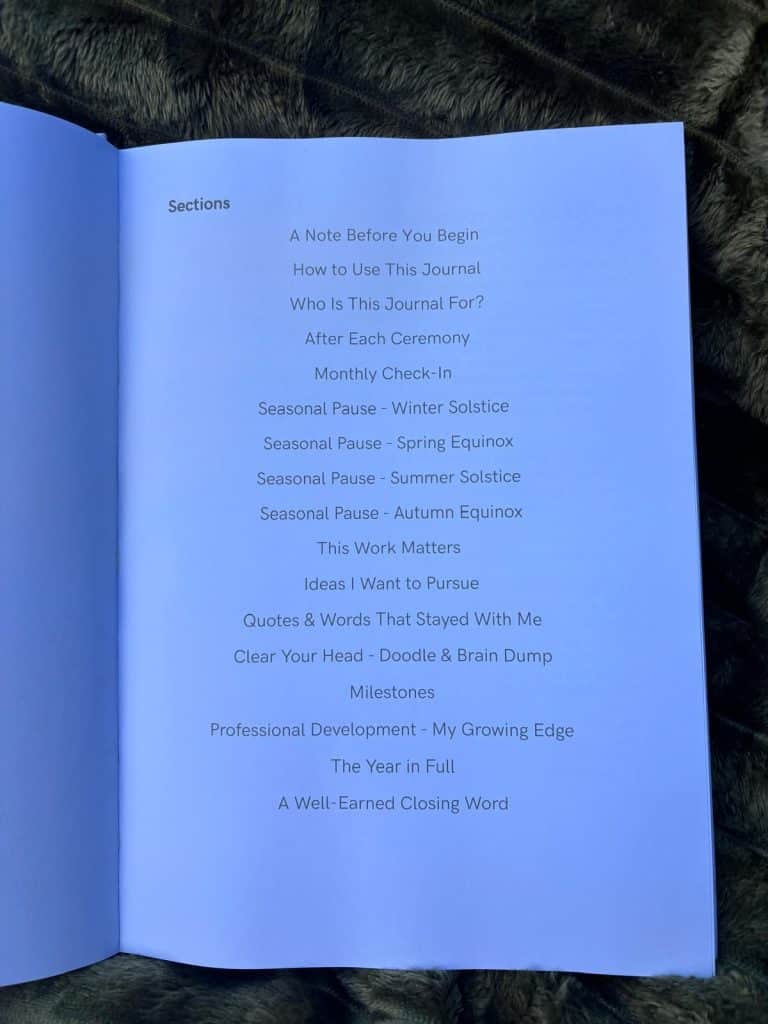
The Celebrant’s Journal gives you a structured but gentle way to reflect after a ceremony: what happened, what you noticed, what you’re carrying, and what you learned that you’ll take into the next one. It’s designed to take ten minutes, not an hour, because realistically that’s what you’ll actually do after a long day. Over time, it becomes something else too: a record of your own growth as a celebrant, in your own words, that you can look back on when you need reminding how far you’ve come.
Why I think this matters as much as the craft itself
In thirty years of coaching people in business, long before I trained as a celebrant myself, I saw the same pattern again and again. The people who lasted, who built something sustainable rather than burning out within a few years, were the ones who built in proper reflection alongside the doing. Celebrancy is no different, and arguably needs it more. Because the emotional content of the work is so much higher than most jobs.
This isn’t about processing every single ceremony in depth. Most days, a quick note is plenty. It’s about having somewhere to go on the days it isn’t plenty, so the weight doesn’t just get carried silently into the next ceremony, and the one after that.
Where to find it
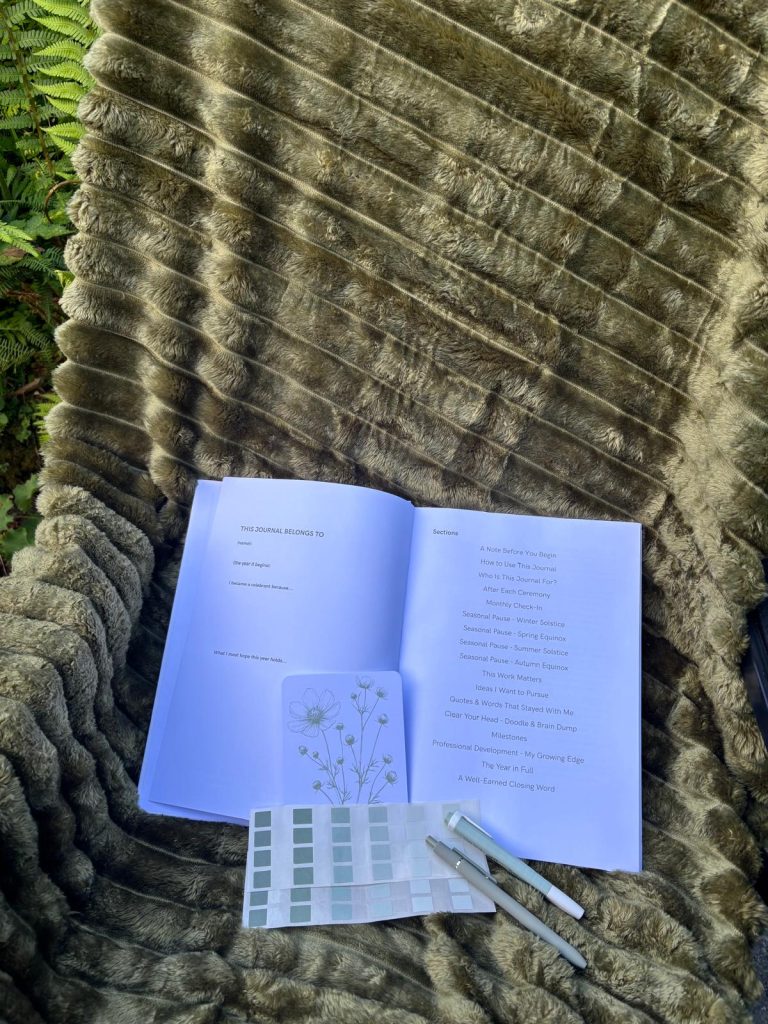
The Celebrant’s Journal is an A4 hardcover, designed specifically for UK celebrants, and it’s available now at £30 If you’re already working as a celebrant, I’d genuinely love to know how you get on with it.
And if you’re earlier in the journey, still training or thinking about it, this is part of what I mean when I talk about building a practice that lasts. The craft matters enormously. So does what you do with yourself in between.
Warmly,
Dinah She/Her